A commercial HVAC failure doesn't wait for a convenient time. It happens on a Friday afternoon in August when your building is fully occupied. It happens overnight in January when a pipe freezes and your heating plant goes down. It happens during a health inspection when your commercial refrigeration system can't hold temperature.
When it does happen, most facility managers and business owners have the same questions: What went wrong? How fast can it be fixed? And what's this going to cost?
After more than 40 years of commercial HVAC repair across Northeast Ohio, we've handled nearly every failure scenario there is. Here's what to expect — and what you can do to minimize the damage.
The Most Common Commercial HVAC Failures We See
Commercial heating and cooling systems are more complex than residential equipment, and the failure modes reflect that complexity. Here are the issues that generate the most emergency commercial HVAC repair calls in our service area:
Compressor Failures
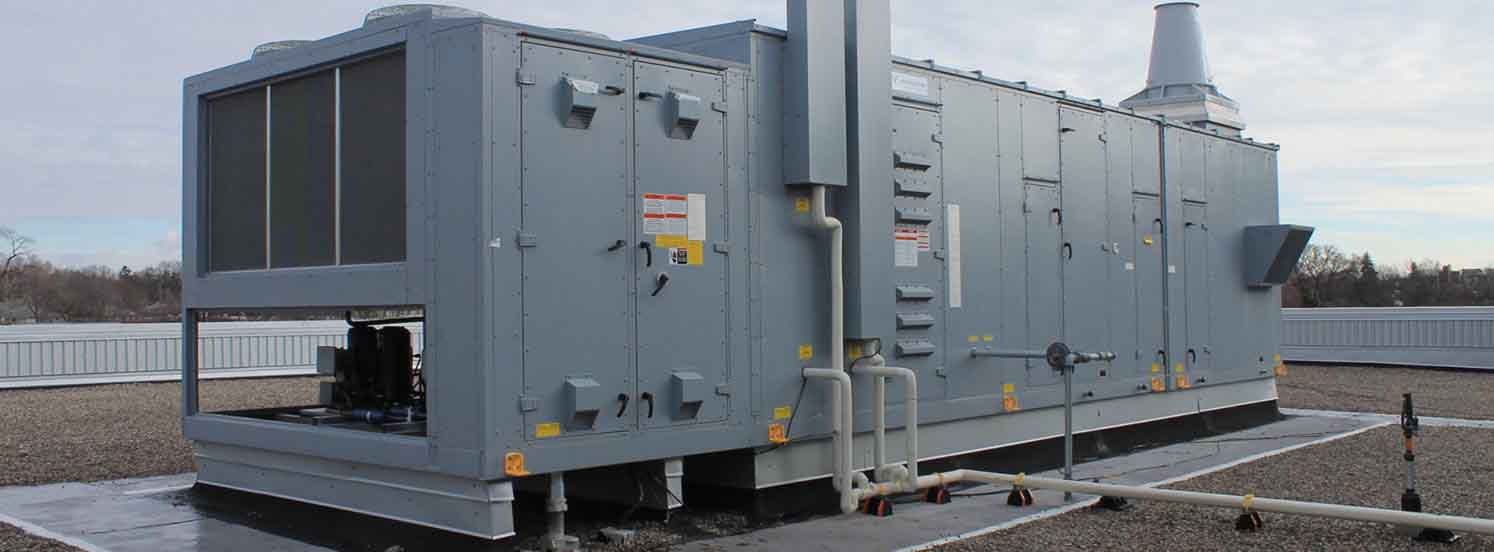
The compressor is the most expensive single component in a cooling system. When it fails, you lose cooling capacity entirely. Common causes include refrigerant leaks (which cause the compressor to overheat), electrical failures, and simple age-related wear. On rooftop units older than 15 years, compressor replacement often triggers a repair-versus-replace conversation — and that's the right conversation to have.
Refrigerant Leaks
A system that's low on refrigerant doesn't just cool poorly — it destroys equipment. Low charge causes compressors to run hot, shortens their lifespan, and can lead to catastrophic failure. Under the 2026 EPA refrigerant regulations, systems with 15+ pounds of charge now require documented leak inspections, making this even more critical to address promptly.
Ignition and Burner Issues
For commercial heating repair, furnace and boiler ignition problems are the most common winter emergency. Faulty flame sensors, cracked heat exchangers, failed ignition modules, and blocked flue passages all require immediate professional attention — these aren't just comfort issues, they're safety issues.
Electrical and Control Failures
Contactors, relays, capacitors, variable frequency drives, and building automation system controllers all fail. Electrical issues are often the fastest to diagnose and repair, but they can present in confusing ways — a thermostat that seems broken may actually be a failed relay three components upstream. This is where experienced diagnostics matter.
Belt and Motor Failures
Fan motors and drive belts are wear items. When a supply fan motor fails, you lose all airflow to the space. When a belt snaps, same result. These repairs are typically straightforward for a qualified technician, but the diagnostic process — confirming it's the belt and not the motor, or the motor and not the VFD — requires commercial-grade experience.
What Happens When You Call for Emergency Repair
When a business calls us for commercial air conditioning repair or commercial heating repair, here's the actual process:
Triage — Our dispatch team gathers basic information: equipment type, symptoms, building occupancy, and whether there are safety concerns (gas smell, water leak, electrical issue). This determines response priority.
Dispatch — A NATE-certified technician is dispatched with a service vehicle stocked with common replacement parts. For after-hours emergencies, our 24/7 on-call rotation ensures someone is always available.
Diagnosis — The technician inspects the failed system, identifies the root cause, and checks for secondary issues. A good technician doesn't just fix the symptom — they look at why the failure happened. A burned contactor might indicate an underlying electrical problem that will burn the replacement if not addressed.
Repair authorization — Before work begins, you get a clear explanation of what failed, what it takes to fix it, and what it will cost. No surprises. If the repair cost approaches a threshold where replacement makes more financial sense, we'll tell you that directly.
Repair and verification — The repair is completed, the system is started, and the technician verifies full operation including temperatures, pressures, airflows, and safety controls. We don't leave until the system is running correctly.
When to Repair vs. When to Replace
This is the most important decision a building owner faces during a breakdown. Our general guidelines:
Repair when the equipment is under 12–15 years old, the failure is a common wear item (belt, motor, contactor, capacitor), and the system has been reasonably maintained.
Consider replacement when the equipment is over 15 years old, the repair is a major component (compressor, heat exchanger), the system uses a phased-down refrigerant, or you've had 3+ service calls on the same unit in the past 12 months.
Always replace when there's a cracked heat exchanger (safety risk), when the repair cost exceeds 50% of replacement cost, or when replacement parts are no longer available.
A trustworthy commercial HVAC contractor won't push you toward replacement when a $400 repair will give you five more years of reliable service. And they won't let you sink $3,000 into a unit that should have been replaced last year.
How to Minimize Downtime Before It Happens
The best commercial HVAC repair is the one you never need. A preventative maintenance program catches failing components before they fail completely. A belt that's showing wear gets replaced during a scheduled visit for $50 — not during an emergency call at 2 AM for $500.
Beyond maintenance, knowing your equipment matters. Keep records of:
Equipment age, model numbers, and refrigerant types
Service history and recurring issues
Warranty status and coverage details
Your HVAC contractor's emergency number — not in a filing cabinet, but posted at every thermostat and in your building emergency procedures
Air-Temp Mechanical: 24/7 Commercial HVAC Repair in Northeast Ohio
We provide commercial air conditioning repair, commercial heating repair, commercial furnace repair, and commercial refrigeration service across Cleveland, Akron, Canton, Toledo, Columbus, Youngstown, Medina, and Sandusky. Our technicians are NATE-certified, our service vehicles are stocked for common repairs, and our 24/7 emergency line means you're never waiting until Monday for help.
Equipment down? Call (216) 579-1552 now — 24 hours a day, 7 days a week. Or contact us online for non-emergency service requests.