In Northeast Ohio, June is the month commercial cooling stops being a convenience and becomes critical infrastructure. The mild stretch of May is over, the first heat advisories arrive, and rooftop units, chillers, and refrigeration racks that were merely "running" in spring are now pinned at full load for days at a time. The buildings that get through July and August without a major callout aren't lucky — they spent June managing peak load deliberately instead of waiting to react to it.
This is the reliability playbook we hand facility managers across Cleveland, Akron, Canton, and Toledo once cooling season is genuinely here. If you ran a proper pre-summer commissioning visit in April, you've already done the hard part. This is about holding that reliability through the hottest twelve weeks of the year — and knowing exactly what to do the moment something starts to slip.
What "Peak Load" Actually Does to Commercial Equipment
A commercial cooling system sized correctly for design conditions can still be pushed to its limit by a Northeast Ohio heat wave. When the outdoor temperature climbs past 90°F and the dew point stays high, three things happen at once: condensing pressure rises, compressors run longer with shorter off-cycles, and any marginal component — a weak capacitor, a contactor with pitted faces, a coil that's 20% fouled — gets pushed from "marginal" to "failed."
The failures we respond to in July are rarely random. They're the predictable result of a small problem meeting sustained maximum load. A capacitor reading slightly low in June is a guaranteed no-cool call in a heat wave. A refrigerant charge that's 8% light runs fine on a 78°F day and loses the space entirely at 94°F. Peak load doesn't create new problems so much as it finds every one you didn't fix in spring.
The Peak-Season Reliability Playbook
1. Manage Load Before You Add Capacity
Before assuming a building "needs more tonnage," look at what's driving the load. Economizer dampers stuck closed, a building management system holding occupied setpoints overnight, blinds-up solar gain on west exposures, and server rooms with no dedicated cooling all inflate peak demand. A tuned building automation system that pre-cools in the morning, resets supply air temperature on load, and locks out simultaneous heating and cooling will shave peak draw without a single new piece of equipment.
2. Watch Demand Charges, Not Just Energy Use
For most commercial accounts in Ohio, the summer electric bill is dominated by demand charges — what you pay for your single highest 15- or 30-minute spike of power draw in the billing period. One afternoon where every compressor and every rooftop unit stages on at the same time can set a demand peak that you pay for all month. Staggered equipment staging, soft-start controls, and BMS load-shedding sequences directly attack that number. We covered the broader economics in our look at how HVAC and refrigeration efficiency pays for itself, but in peak season the demand-charge line item is where the fastest dollars hide.
3. Treat Refrigerant as a Reliability Risk, Not Just a Cost
Peak load is exactly when a slow refrigerant leak turns into lost cooling — and under the 2026 EPA refrigerant rules, topping off a leaking system is no longer a casual decision. Systems with 15+ pounds of charge carry documented leak-inspection and repair obligations, and the higher cost of phased-down refrigerants makes "just add a few pounds every summer" an expensive habit. If a unit needed refrigerant in April, it needs a leak found now — not another charge in July.
4. Keep Condensers and Airflow Honest All Summer
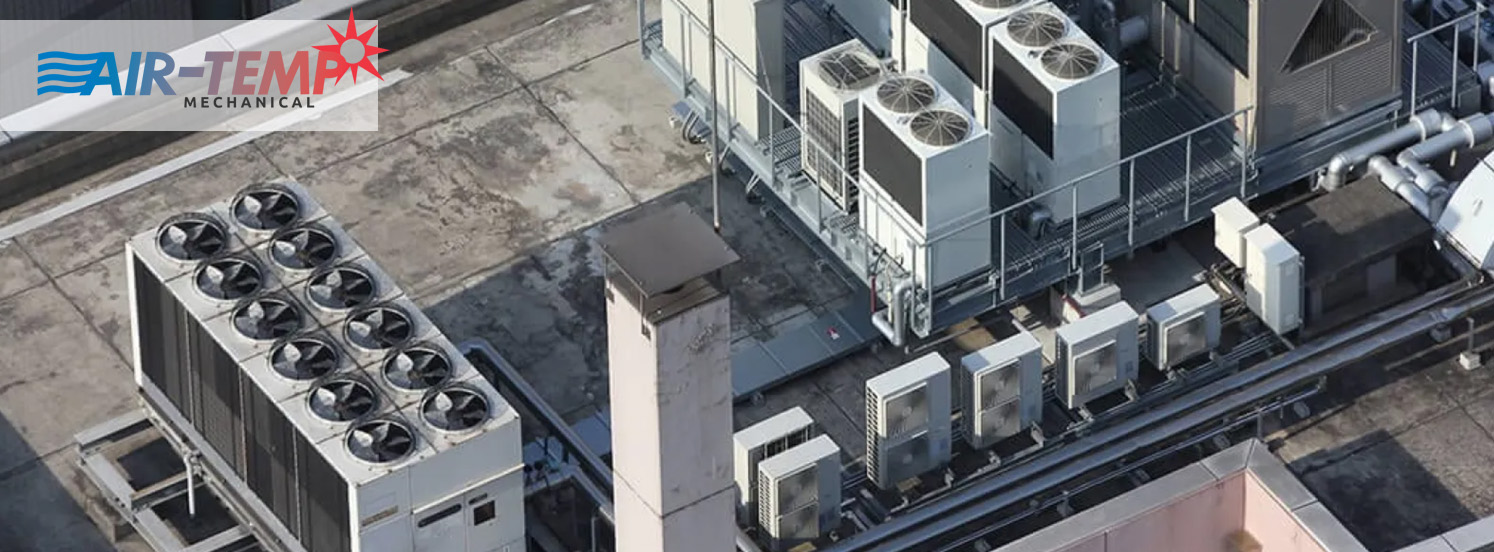
Cottonwood season in Northeast Ohio peaks right as cooling load does. A condenser coil that was clean in April can be visibly matted with seed fluff by mid-June, and every percent of blocked coil raises head pressure and steals capacity. A quick mid-season condenser walk — rinse the coils, clear the fan guards, replace filters that loaded up faster than expected — protects the compressors through the worst of the heat. This is the kind of work a preventative maintenance contract schedules automatically instead of leaving to chance.
5. Don't Forget Refrigeration Runs in the Same Heat
Grocery, food service, and cold-storage operators face a double hit in summer: the building cooling load climbs at the same time the commercial refrigeration systems are fighting higher ambient temperatures around the condensing units. A walk-in or rack system that holds temperature fine in spring can drift in a heat wave when its remote condenser is sitting in 95°F air. Product loss happens fast, and it happens on the hottest day — verify condenser clearances, defrost cycles, and door seals before the heat arrives, not after a case alarm.
6. Plan Around Heat Waves and Summer Storms
Northeast Ohio summers bring heat and violent storms in the same week. We dug into this in our piece on the impact of heatwaves and heavy rains on commercial HVAC: power blips that trip compressors, lightning that takes out control boards, and flooded rooftop curbs that short out economizer actuators. Knowing which of your units are on emergency power, which have surge protection, and which roof drains tend to back up turns a storm from a crisis into a checklist.
When Something Does Fail: Have the Plan Ready
Even a well-maintained building can lose a unit in a heat wave. The difference between a two-hour inconvenience and a two-day shutdown is whether you decided in advance what happens next. Before peak season, every facility manager should know: which spaces are mission-critical, what the call escalation path is, and who answers the phone at 6 PM on a Saturday.
That's the reasoning behind a standing emergency service relationship — when a compressor drops on the hottest afternoon of the year, you're already in the system, not starting a vendor search from scratch. And it helps to know what to expect when a system fails so the diagnosis-to-repair process moves fast instead of stalling on approvals and parts.
Spend June Protecting July and August
Peak-season reliability isn't dramatic. It's a tuned control sequence, a clean condenser, a leak found before it empties a system, and a phone number you don't have to look up. The facilities that invest a few hours of attention in early June are the ones still comfortable — and still open for business — when the heat index peaks.
Schedule Peak-Season Support
Air-Temp Mechanical provides commercial cooling and refrigeration support across Cleveland, Akron, Canton, Toledo, Columbus, Youngstown, Medina, and Sandusky. Our NATE-certified technicians handle mid-season tune-ups, preventative maintenance contracts, emergency response, and full commercial HVAC service for everything from single rooftop units to multi-chiller plants and refrigeration racks.
Call (216) 579-1552 to get on our summer service schedule, or contact us online. The best time to line up peak-season support is before the first heat advisory — not during it.