It seems like refrigeration should have an easy winter. The outside air is cold, the condenser has no trouble rejecting heat, and the walk-in cooler is surrounded by a whole region doing its job for it. Many restaurant owners and grocers assume that the season for refrigeration problems ended in August.
It didn’t. Refrigeration systems are designed around a range of operating pressures, and a Northeast Ohio winter pushes the outdoor half of the system to the cold edge of that range. Equipment that ran perfectly through a July heat wave can short-cycle, ice up, or fail to start in January for reasons that have nothing to do with summer. And winter failures tend to hit right when stakes are highest — during the holiday rush for restaurants, caterers, and grocers.
The problem with “too cold”: head pressure
A refrigeration system moves refrigerant using the pressure difference between its high side (the condenser outdoors) and its low side (the evaporator in the walk-in). The expansion valve that feeds the evaporator depends on that difference. When the outdoor condenser gets very cold, the high-side pressure — the head pressure — drops, the difference shrinks, and the valve can no longer push enough refrigerant through.
The result is a starved evaporator. Suction pressure falls, the coil can ice over, the system trips on low pressure or short-cycles, and the box drifts warm — all while it is freezing outside. This is one of the most common winter refrigeration calls in our area, and it surprises people every year.
Systems with outdoor condensers handle this with head pressure control, and there are a few ways to do it:
- Fan cycling or fan speed control. On a multi-fan condenser, fans are staged off or slowed as the weather cools, so the coil rejects less heat and pressure stays up. A failed pressure switch or speed controller leaves every fan running at full speed on a 10-degree day.
- Flooded condenser control. A head pressure control valve backs liquid refrigerant up into the condenser, reducing the coil’s effective size in cold weather. This method requires extra refrigerant and a receiver large enough to hold it in summer. A system charged correctly on a warm day can be short of refrigerant on a cold one — a classic cause of winter-only problems.
- Low-ambient kits and dampers on smaller condensing units, which restrict airflow across the coil.
Whichever method your equipment uses, it only does anything in winter, so it sits untested for half the year. A fall check confirms that it actually responds before the weather requires it.
Refrigerant migration and the hard start
When a system cycles off on a cold night, refrigerant migrates to the coldest part of the system. In winter, that is often the compressor sitting outside in the condensing unit. Refrigerant settles into the crankcase and mixes with the oil. On the next start, the mixture foams, the compressor loses lubrication, and liquid can reach places designed only for vapor. Repeated over a winter, that wears out a compressor long before its time.
Two things prevent it: a working crankcase heater, which keeps the compressor warm enough that refrigerant doesn’t collect there, and on many systems a pump-down cycle, which moves refrigerant out of the low side before the compressor stops. Crankcase heaters fail quietly — nothing changes in how the box holds temperature — so they need to be checked with a meter, not by looking.
Snow, ice, and the condenser itself
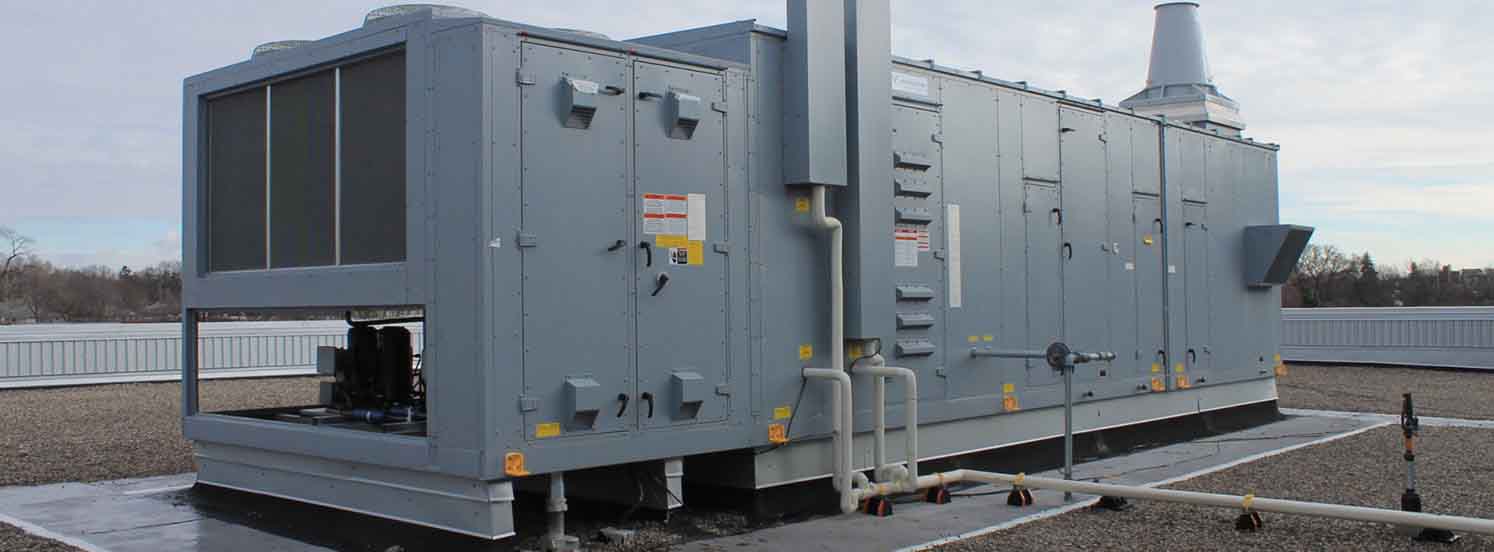
The weather also attacks the hardware directly. Lake-effect snow drifts against ground-mounted condensing units and buries them. Ice from roof edges and gutters falls onto fan guards. A plow pushes a snowbank against the coil. Rooftop condensers collect snow that melts during the day and refreezes at night, locking fan blades in place.
A blocked condenser in winter can actually cause high head pressure trips, while a frozen fan motor burns out trying to turn. The fixes are simple — clear access, raise units that sit too low, protect them from roof runoff, keep snow piles away — but someone has to think about it before the first storm, not after.
What winter does inside the box
Not every winter problem is outdoors. Walk-in freezers depend on door heaters and frame heaters to keep the door gaskets from freezing shut, and on drain line heaters so the defrost water can drain. Cold, dry winter air also changes how frost builds on the evaporator, and defrost schedules set for humid summer conditions may need adjustment. A failed drain heater shows up as an ice dam in the drain pan; a failed door heater shows up as a gasket that tears the first time someone yanks the door open.
A refrigeration maintenance checklist for fall
Before the cold sets in — and before November and December put the most product of the year in your boxes — this is what a refrigeration maintenance visit should cover:
- Verify head pressure control operation: fan cycling switches, speed controllers, or the flooded condenser valve.
- Check the refrigerant charge with winter operation in mind, especially on flooded condenser systems.
- Test every crankcase heater for current draw, and confirm the pump-down operation where it is used.
- Clean condenser coils and check fan motors and blades before ice and snow arrive.
- Test door, frame, and drain line heaters on walk-in freezers, and replace worn gaskets.
- Review defrost timing and confirm the drains are clear.
- Check the site: snow clearance around ground units, roof runoff above rooftop units, and a plan for where plowed snow goes.
If you’re running older equipment, the off-season is also the right time to think about its future. Refrigerant rules have changed what new systems use and what it costs to keep older ones running — our overview of the 2026 EPA refrigerant changes covers what that means for a cooler or freezer on its way out.
Plan for winter, not just summer
A walk-in failure costs the same in January as it does in July: lost product, a scramble for temporary storage, and a health inspector’s questions. We broke down what refrigeration downtime really costs in an earlier post. The difference is that winter failures are more preventable, because they come from a small set of components that only work in the cold — and that can all be tested in an afternoon in October.
Air Temp Mechanical has serviced commercial refrigeration across Northeast Ohio since 1978 — walk-in coolers and freezers, reach-ins, and multi-zone systems for restaurants, grocers, food distributors, and healthcare facilities. If you’d like your system checked before winter and the holiday rush, our commercial refrigeration team can schedule a visit, and we’re available around the clock if something fails. Get in touch.